Posted by Mercado do Colchão on March 10, 2026
Plants in the Bedroom: Which Plants to Choose for Better Sleep?
In a room designed to help you recharge, choosing a plant for the bedroom can help create a more soothing atmosphere and promote a more restful night’s sleep.
At Marché des Matelas, we believe that rest begins with the right environment. As we’ve already explained in other articles on the influence of light or choosing the ideal mattress for sleep, every detail counts—and a plant in the bedroom can be one of those small elements that enhance the atmosphere of a restful space.
Air-purifying plants for the bedroom: are they really effective?
For a long time, people thought you shouldn’t have plants in the bedroom. In reality, this idea is mostly a myth.
Some houseplants are known to help improve air quality and create a refreshing atmosphere in the room. An air-purifying houseplant can help reduce certain substances in indoor air and contribute to a more pleasant environment.
Among the plants often recommended for bedrooms are:
- Sansevieria (mother-in-law's tongue) – a very hardy plant that releases oxygen at night;
- Spathiphyllum (peace lily) – known for helping to filter certain indoor air pollutants;
- Aloe Vera in a bedroom – an easy-to-care-for plant that helps improve indoor air quality;
- English ivy – valued for its ability to reduce certain airborne particles.
For many indoor plant experts, these species are among the best choices for adding a plant to a bedroom, especially in urban homes.
Plants for the master bedroom
A couple's bedroom should evoke a sense of balance, comfort, and tranquility. In addition to a good mattress and a suitable bed frame, adding a plant to the room can enhance this sense of well-being.
Certain plants are particularly popular in this type of space:
- Jasmine – its sweet scent promotes relaxation;
- Lavender – known for its soothing properties;
- The rubber plant – a great houseplant, elegant and easy to care for.
If you're looking for the best plant for your bedroom, your choice will depend mainly on the amount of light available, the size of the room, and how much time you want to spend caring for it.
Plant absorbs moisture in the room
In some homes, humidity levels may be slightly high. Certain plants can help naturally regulate the room’s atmosphere. A plant that absorbs humidity can help maintain a more balanced environment.
Plants such as ivy, peace lilies, or certain ferns are sometimes chosen for their ability to improve indoor air quality and maintain humidity levels.
Which plants should you avoid in the bedroom?
Not all plants are suitable for a bedroom. Some species may not be recommended for a bedroom due to their toxicity, an overpowering scent, or their allergenic potential.
Some plants that are not recommended for the bedroom include:
- The oleander;
- Certain varieties of hydrangeas;
- The fragrant lilies;
- Plants with fuzzy leaves that easily trap dust.
If you have children or pets, you should be even more careful when choosing plants.
How can I incorporate a plant into my bedroom?
To seamlessly incorporate a plant into a room, a few simple rules can be helpful:
- Choose one or two species suitable for indoor spaces;
- Place the plant near a window to meet its light requirements;
- Avoid placing it directly above the headboard;
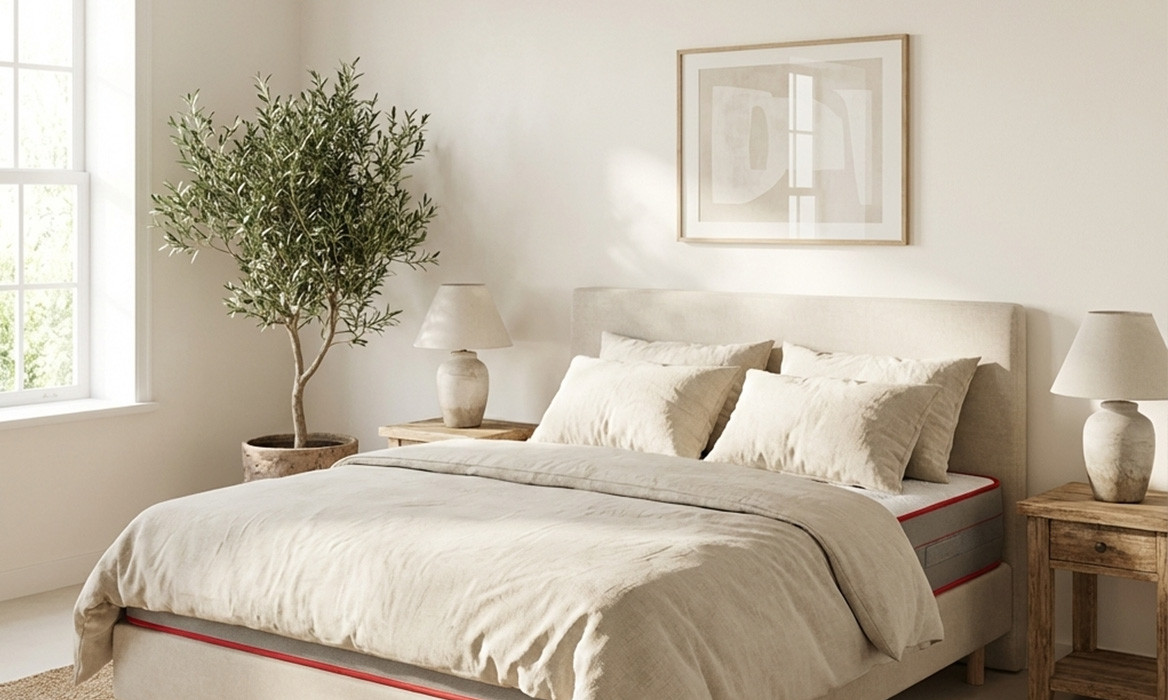
- Incorporate it into the decor, the bed frame, and the headboard to create a harmonious ensemble.
A plant in the bedroom can make the room feel cozier and more natural without disturbing your sleep, provided you choose the right species.
Plants and Sleep: A Boost to Comfort
Plants help create a more pleasant environment, but they are no substitute for the essentials of a good night’s sleep: a quality mattress, a suitable box spring, and a comfortable pillow.
At Marché des Matelas, we know that a good night’s sleep depends on several factors: the right lighting, a balanced sleep routine, a comfortable temperature, and a mattress that meets your needs.
Adding a plant to your bedroom—whether it’s a small decorative plant or a large one—can enhance the space and make it feel more natural and relaxing. The key is to choose the right varieties, avoid unsuitable plants, and maintain a sense of balance in the room