Published by Mercado do Colchão on February 20, 2026
What is the ideal density for a mattress?
Identify the ideal density of a mattress is one of the most important criteria for ensuring comfort, durability, and good back health.
Often confused with firmness, mattress density actually corresponds to the amount of material used per cubic meter of foam. It is a direct indicator of the quality and durability of the mattress.
What is mattress density?
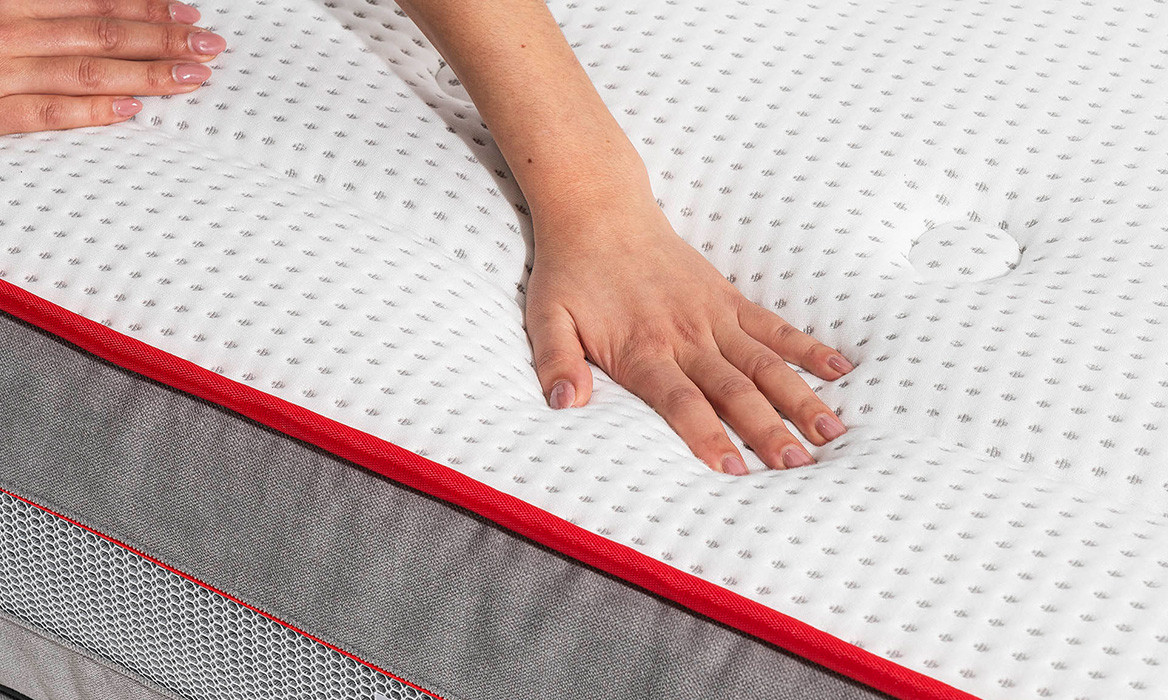
The density of a mattress is expressed in kg/m³ and indicates its ability to support the weight of the sleeper over time without losing its properties.
The higher the density, the more durable and resistant to sagging the mattress will be.
- Standard foam: between 25 and 30 kg/m³;
- High-density foam: from 30 kg/m³;
- High resilience (HR) foam: generally ≥ 35 kg/m³
When deciding what density to choose for a foam mattress, it is essential to take into account the user's weight and intended use.
What density should you choose for a mattress?
The density of a mattress depends mainly on the weight of the sleeper and the frequency of use. Choosing the right density based on weight ensures adequate support, greater durability, and consistent comfort over time.
Mattress density table according to weight
The choice of density must take into account the user's weight and the type of foam (conventional foam or HR – high resilience). As a guide:
|
User weight |
Recommended density (conventional foam) |
|
Up to 60 kg |
25–30 kg/m³ (standard foam) |
|
60 to 80 kg |
30 kg/m³ or more |
|
80 to 100 kg |
30–35 kg/m³ |
|
Over 100 kg |
≥ 35 kg/m³ (preferably HR) |
This mattress density chart is a useful guide for determining the density best suited to the sleeper's weight, promoting greater durability and good structural support.
However, the final choice must also take into account the desired firmness, the internal composition of the mattress, and personal preferences.
Mattress density according to use
- Single mattress: for a single mattress, the recommended density is generally between 28 and 33 kg/m³, depending on the user's weight and frequency of use;
- Children's mattresses: for a child, a density of between 23 and 28 kg/m³ is generally recommended to ensure adequate support during growth;
- High-density mattress: A high-density foam mattress, particularly HR foam, is recommended for adults or heavier individuals. It offers better resistance to sagging and greater durability.
What is the best mattress density for your back?
For people suffering from back pain, the best mattress density should allow for proper spinal alignment.
For adults, a density of at least 30 kg/m³ is generally recommended, or even high-resilience foam (≥ 35 kg/m³) for more durable and effective support.
A well-chosen high-density foam mattress helps to keep your back properly supported and reduce pressure points.
Ideal density for mattresses: criteria to consider
To determine the ideal density for mattresses, it is important to consider:
- The weight of the sleeper;
- Frequency of use;
- Age (adult, child, or teenager);
- Specific needs in terms of comfort or orthopedic support.
A well-suited high-density mattress is a long-term investment in sleep quality. Choosing the right mattress density promotes healthier and truly restful nights.