Published by Mercado do Colchão on February 13, 2026
Nighttime Phone Use: Effects of Blue Light Before Bedtime
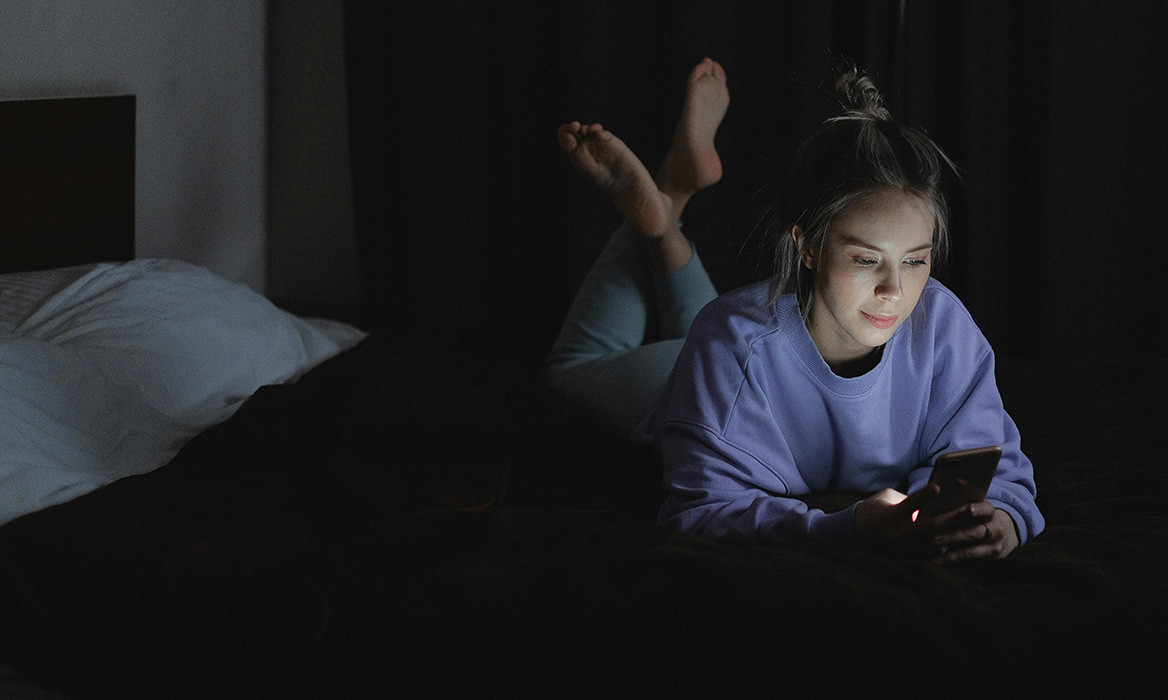
Sleeping with your phone next to you seems harmless, but the truth is that your phone at night can interfere with your sleep cycle, increase restlessness at bedtime, and reduce the likelihood of reaching consistent deep sleep.
In this article, we explain the effects of cell phones on the brain, how they influence your sleep routines, the best time to sleep, and we leave you with some tips for falling asleep.
Does your cell phone affect your rest?
Yes, exposure to blue light before bedtime can increase restlessness when trying to fall asleep. These effects occur due to three factors.
1. Blue light before bedtime
The brain cannot distinguish blue light from natural daylight. As such, it perceives that it is still daytime.
The light emitted by screens (especially LEDs) delays sleepiness, interfering with the body's signals to start resting. Real-world studies show that exposure to smartphone light at night can suppress melatonin, especially when used without filters.
This means that if your brain receives light at 11 p.m., it will take longer to enter rest mode.
2. Effects of cell phones on the brain
Scrolling, short videos, messages, and news create hyperstimulation. The result? More difficulty falling asleep, racing thoughts, and greater restlessness at bedtime.
3. Micro-awakenings
Even if you don't wake up completely, vibrations, sounds, and light from the screen can cause micro-awakenings. This fragments your sleep and disrupts the continuity of your sleep cycles.
Sleep cycle: why is deep sleep important?
Sleep occurs in cycles, alternating between NREM (including deep sleep) and REM phases. Deep sleep is a critical stage for the body's physical recovery.
If you fall asleep late, with your brain stimulated, you tend to:
- Taking longer to enter the first cycle;
- Sleep more lightly;
- Wake up more easily.
Ideal hours of deep sleep by age
There is no single number that applies to everyone, even within the same age group. What we do know is this:
- Adults typically spend about 10% to 20% of the night in deep sleep, which amounts to approximately 40 to 110 minutes when they sleep 7–9 hours;
- Children and adolescents tend to have deeper sleep than adults, and this time decreases throughout life.
The most reliable way to optimize deep sleep, by age, is to ensure the recommended total duration and reduce interruptions.
Recommended sleep duration:
- Adults (18–64): 7–9 hours per night;
- 65 years and older: 7–8 hours per night;
- Adolescents (14–17): 8–10 hours per night;
- Children (6–13): 9–11 hours per night.
Sleeping with your cell phone next to you
When your cell phone remains on your bedside table, the goal should be to minimize the impact it may have on sleep quality by taking effective measures.
Digital quarantine
- Ideally, stop using screens 60 minutes before going to bed;
- If this is not possible, 30 minutes without screens can already make a positive contribution;
- Activate night mode and reduce brightness, but consider this option as a complementary measure rather than a definitive solution, since light and content continue to stimulate the brain.
A simple change to improve sleep
- Whenever possible, charge your cell phone outside your bedroom or at least out of immediate reach;
- Use airplane mode or the "do not disturb" function to avoid interruptions during the night;
- Consider replacing your cell phone with a physical alarm clock, reducing the temptation to check it during the night or when you wake up.
Sleep routines to improve rest
The most consistent way to improve sleep is through regularity. The body responds positively to stable and predictable routines.
3-2-1 Routine
- 3 hours before bedtime: avoid heavy meals and excessive alcohol consumption;
- 2 hours before: reduce demanding tasks, work, or stressful topics;
- 1 hour before: avoid screens and opt for a relaxation ritual (warm bath, reading a paper book, breathing exercises).
Best time to sleep: how to determine yours
Instead of looking for the ideal time, set a functional and sustainable schedule based on your routine:
- Determine what time you need to wake up;
- Count back from 7:30 a.m. to 8:30 a.m. (for adults);
- Try to maintain this schedule regularly, including weekends, with a little flexibility.
This approach promotes respect for the circadian rhythm and increases the likelihood of completing sleep cycles more consistently.
"I can't sleep": what should you do?
If you have been in bed for 20 to 30 minutes without being able to fall asleep:
- Get up and leave the bed;
- Go to a dimly lit environment and engage in a monotonous, relaxing activity (light reading, breathing, gentle stretching).
- Return to bed only when you feel sleepy;
- Avoid using your cell phone, as it reactivates mental stimulation and can further prolong the time it takes to fall asleep.
Tips for falling asleep
- 4–7–8 breathing: inhale for 4 seconds, hold for 7, and exhale for 8 (repeat 4 cycles);
- Progressive muscle relaxation: relax your body gradually, from your feet to your head;
- Record your concerns: write down what is bothering you for 5 minutes and then close the notebook, signaling to your brain that this issue is "resolved" for now.
Bedroom: comfort for a restful sleep
Even with a good routine, if the body does not find adequate comfort, the likelihood of waking up increases.
To reduce interruptions and improve sleep continuity, consider:
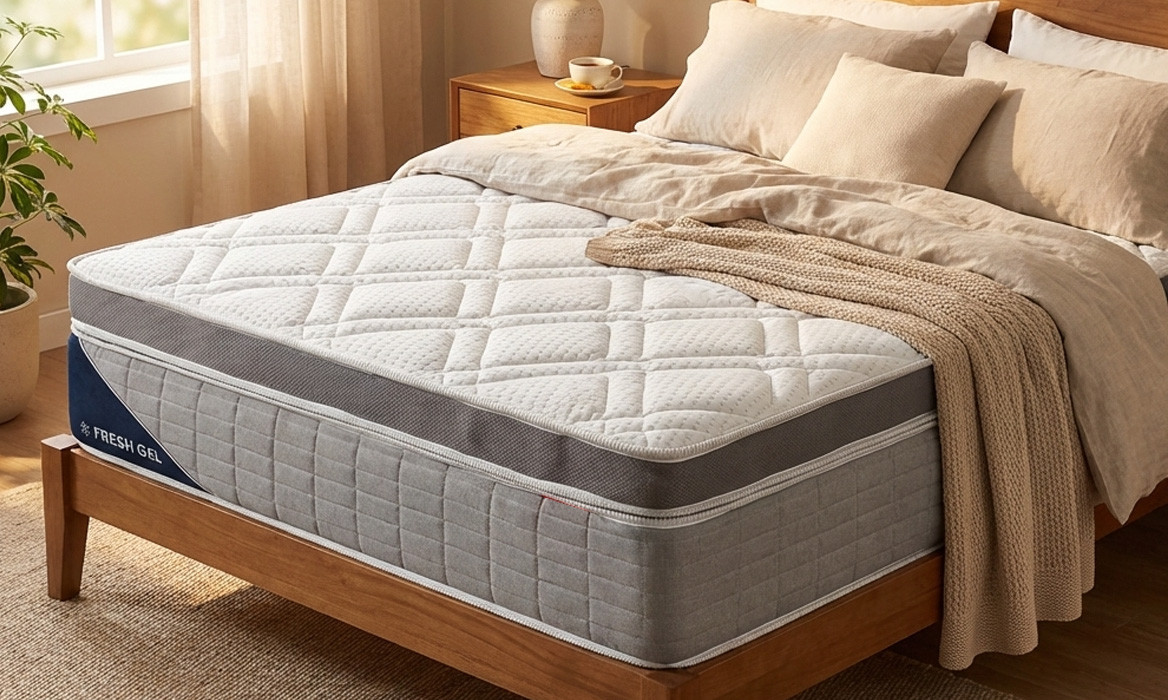
- A mattress with adequate support that keeps the spine aligned and reduces pressure points;
- A pillow adjusted to your sleeping position, with adequate height and firmness.
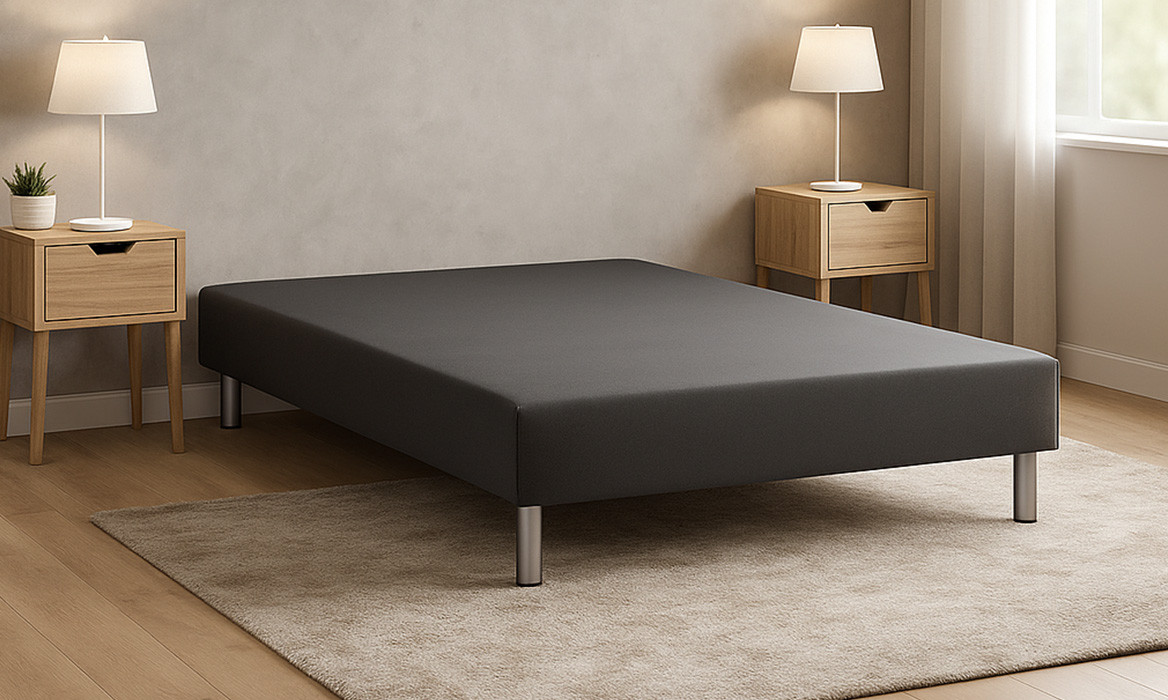
- A bed that promotes deep, hygienic sleep.
At Mercado do Colchão, we understand sleep as an integrated system: habits, environment, and sleep equipment. A well-chosen mattress and pillow contribute to more continuous sleep.