
Posted by Mercado do Colchão on November 20, 2026
Winter Duvet: What’s the Ideal Weight for Staying Warm While Sleeping?
When temperatures drop, a good comforter makes all the difference in how comfortable your bed is. But choosing a winter comforter can raise some questions: Does a higher fill weight always mean more warmth? And how do you know which one is right for a cold bedroom?
What does the weight of a comforter mean?
The fill weight indicates the amount of filling per square meter, usually expressed in g/m². For comforters with similar fillings, a higher fill weight tends to provide better thermal insulation. However, the material used and the way the filling is distributed also influence the result.
For this reason, two comforters with the same weight may provide different levels of warmth. Thickness alone is also no guarantee of greater comfort.
What is the best fill weight for a winter comforter?
As a general guideline for synthetic comforters, models weighing up to about 200 g/m² are lighter and are usually suitable for mild nights. Options for mid-season use range from 200 to 300 g/m². For cold nights, people often look for comforters weighing 300 g/m² or more, including models weighing 350 g/m².
These ranges are approximate. A down or feather comforter can provide good insulation with less filling than a synthetic model, so you should not compare only the number of grams between different materials.
If you sleep in an unheated room or feel cold easily, you may benefit from a comforter with better insulation. If your room stays warm throughout the night, a comforter that’s too warm could cause you to sweat and feel uncomfortable.
The filling affects warmth and comfort
Synthetic fillings are a practical option for those looking for easy maintenance and a variety of warmth levels. Down and feather models stand out for their ability to trap air and provide insulation while being relatively lightweight.
It's also important to consider the outer fabric and the overall breathability of the comforter. A comfortable comforter should help retain heat without making you feel overly damp during the night.
How do you choose a comforter for a cold bedroom?
Before buying, consider the typical temperature in your bedroom and your sleeping habits. People who use heating at night may need a different warmth level than those who sleep in a cooler room. The bedding you use with the comforter also makes a difference.
If you usually wake up feeling cold, consider a winter comforter with better insulation. If you often wake up sweating, a lighter or more breathable option might be better. The goal is to maintain a comfortable temperature throughout the night without having to add too many layers.
What size comforter should I choose for a double bed?
A comforter should cover the surface of the mattress completely and have enough overhang on the sides so that you remain comfortable when you change positions. In a shared bed, this overhang is even more important, especially if both people move around during the night.
Always check the mattress measurements and compare them to the dimensions listed on the product page. The ideal size also depends on the mattress height and the type of side trim you prefer.
A great choice for fall and winter evenings
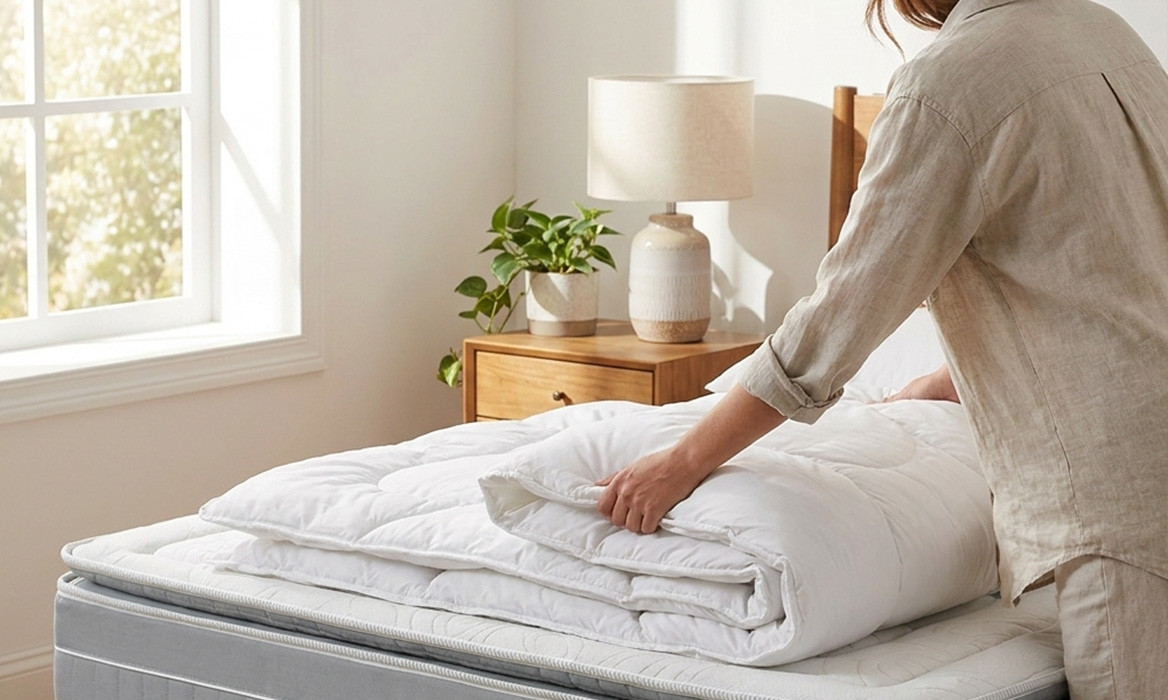
At Mercado do Colchão, you’ll find the Percale Duvet, designed for the fall and winter seasons. The duvet features a combed percale cotton exterior and is described by the brand as soft and breathable, with the filling specified in the product description. It’s available in different sizes to fit your bed.
You can check the measurements and features of the percale comforter before choosing the option that best suits your bedroom.
How can you make your comforter last longer?
Air out the bedding regularly and follow the washing instructions on the comforter's label. Avoid storing it while it's damp, and make sure it's completely dry before putting it away. A washable comforter cover also helps protect the outer fabric during daily use.
When the seasons change, store it in a dry, well-ventilated place without compressing it too much. These precautions help preserve the filling and ensure it remains comfortable.
The right winter comforter is the one that suits your sleep needs
Choosing a warm comforter involves finding the right balance between weight, materials, room temperature, and personal preference. Before making a decision, check the warmth level, size, and care instructions.
If you'd like to explore other selection criteria, be sure to read our article "The Best Duvets: How to Choose the Right One for a Good Night's Sleep" and discover the most comfortable option for your bed.