
Published by Mercado do Mattress on 14th Jul 2025
Sleep: frequently asked questions and tips for sleeping better
Many people still have doubts about what really influences the quality of their sleep: from daily habits to choosing the ideal mattress. Sleeping well is not a luxury: it is a vital necessity for the body and mind.
In this article we have gathered together the most frequently asked questions about sleep and answered them in a clear and practical way. We also explore the different types of rest, the most common changes, the phases of sleep and other essential aspects for your well-being.
Frequently asked questions about dreaming
Definition of dream
The World Health Organization (WHO) defines sleep as an essential physiological state characterized by a reversible loss of consciousness and organized brain activity, whose main function is to guarantee the physical, mental and emotional balance of the organism.
The WHO considers sleep to be one of the pillars of health, along with nutrition and physical activity.
Types of dream
There are two main types of sleep: REM (Rapid Eye Movement) and NREM (Non-Rapid Eye Movement).
-
The NREM dream is made up of three phases of increasing depth.
-
REM sleep, normally associated with dreams, is essential for emotional balance and memory consolidation.
How many hours should I sleep a night?
The ideal is to sleep between 7 and 9 hours a night, depending on age, level of activity and individual needs.
The quality of sleep is just as important as its duration: chronic poor sleep can affect the immune system, memory and even mood.
Dream functions
Sleeping well is essential:
-
Physical and muscular recovery.
-
Memory consolidation and learning.
-
The regulation of the immune system.
-
Hormonal and emotional balance.
During rest, the body regenerates and prepares for the next day.
Dream phases
Dreams unfold in cycles made up of several phases:
-
Phase 1 - Transition between vigil and dream.
-
Phase 2 - Light dream.
-
Phase 3 - Deep dreaming (essential for physical recovery).
-
REM dreaming - Intense brain activity associated with dreams and memory consolidation.
Each cycle lasts approximately 90 minutes and is repeated several times throughout the night.
Ideal hours of deep sleep according to age
Deep dreaming tends to diminish with age. On average:
-
Babies: 3 to 4 hours of deep sleep per night.
-
Children: 2 to 3 hours.
-
Adults: 1.5 to 2 hours.
-
Mayors: 1 to 1.5 hours.
It is important to create the right conditions - suitable mattress, quiet environment and absence of light and noise - so that this phase is truly restorative.
Sleep disorders
Sleep disorders are becoming increasingly common. The most frequent include:
-
Insomnia: difficulty reconciling or maintaining dreams.
-
Sleep apnea: temporal interruption of breathing.
-
Restless leg syndrome.
-
Sleepwalking and parasomnias.
These problems can seriously affect quality of life and should be assessed by a health professional.
How to sleep better at night?
Sleeping well depends on several factors: a quiet environment, a regular routine, a comfortable mattress and good sleep hygiene. Avoiding screens before going to bed, copious meals and bright light can significantly improve the quality of your night's rest.
Does the mattress affect sleep?
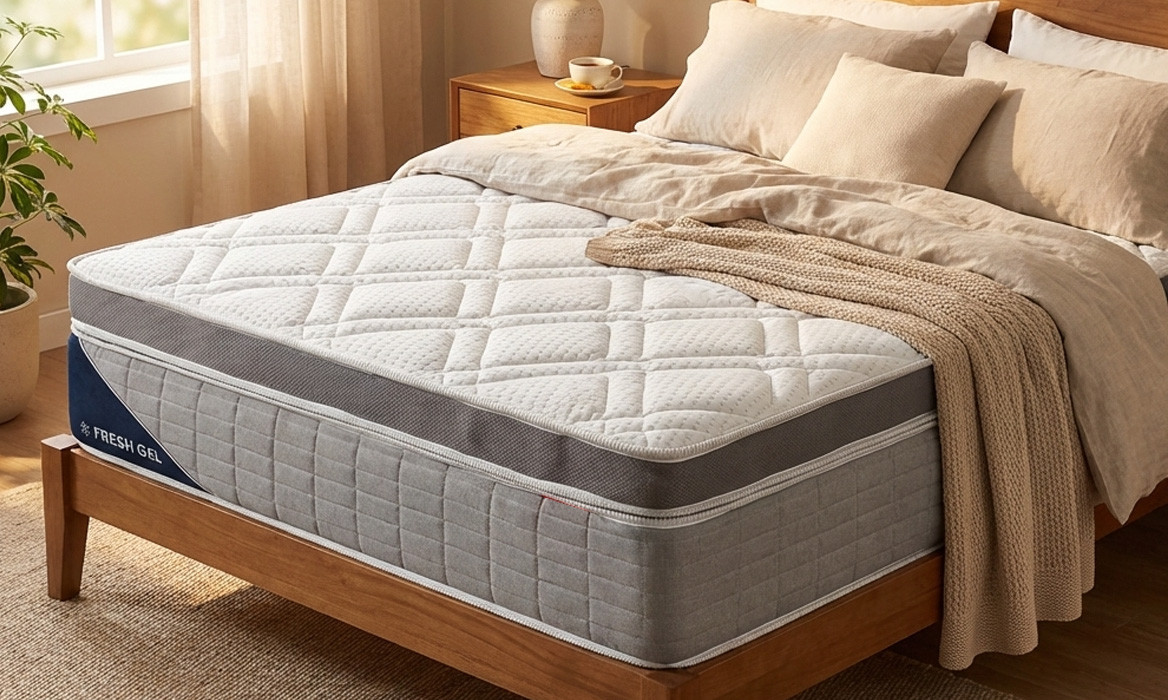
Yes, the mattress plays a fundamental role in the quality of rest. A good mattress provides adequate support for the spine, relieves pressure points and reduces night-time movements.
To find out which type of mattress best suits your needs, we recommend reading our article "How to choose the ideal mattress".
Do you want to improve the quality of your dreams? At Mercado del Colchón you will find everything you need to sleep better: mattresses adapted to your body, beds with storage space and accessories that turn your bedroom into an authentic resting refuge.